Education should not stop at physical and intellectual growth. These must lead to the development of character. Then the individual learns to give his or her extra strength, knowledge and power to serve the nation, to serve other people, and to serve the world at large. They stop being self centred and become service centred, which is the need of the hour.
This is the most important task before teachers today: sculpting, shaping and moulding our youth into socially responsible citizens, and good human beings with the virtues of sincerity, commitment, dedication, service and sacrifice.
A UNESCO report on education carried a significant title, Learning to Be. Not learning to do, or learning to make. That is the essence of true education: the art of living, not only in peace with yourself but with other people, serving them, helping them, and contributing your best to social and national growth. Swami Vivekananda put it in three words: be and make.
The teacher is the sculptor
The image sculpted is the student. The expertise of the sculptor shows in the sculpture he creates, and the sculptor is full of creativity and imagination. If the sculptor makes a single mistake, it is there forever. The teacher understands this responsibility, and creates a wonderful sculpture called the student.
Living in a VUCA world
In this pandemic we live in a VUCA world: volatile, uncertain, complex and ambiguous. The term came out of the United States Army, whose officers found themselves in an alien environment, accepted the reality and reframed their strategies from there. The world is full of uncertainty, yet we live as if it were permanent.
As a teacher you may ask how this concerns you, when your job is to teach what is in the textbook. Whether we like it or not, the lessons a student studies now may or may not be useful to him in the future. It is my belief that life skills should be taught alongside the subjects. The new strategies of online learning will create a new kind of adaptability in the teaching and learning process.
- Volatility. Life is predictably volatile. Teachers must keep updating themselves professionally, so they have a bigger vision that helps them overcome it.
- Uncertainty. Teach students that life will bring uncertainty to everybody, and that they must face it with courage and zeal, see every issue in a larger perspective, and appreciate the life they have been given.
- Complexity. Prepare students for the complex world after school. Give them complex exercises, and tell them why: so they can relate what they learn to real life.
- Ambiguity. The future is unclear, so we must build clarity in our students. And a teacher must be clear about why they chose to teach. If the only reason is money, I would strongly recommend doing something else.
A student becomes civilised through education, and the teacher does that wonderful work. It shows in the student's actions in society, and when you see how they behave, you wonder at the architect behind it. The noble teacher is a godly guide.
Six skills for the classroom
When I first started as a teacher at the Kaligi Ranganathan Montford school, I had fixed ideas about my role: deliver content, address misconceptions, and assess student work. I taught mathematics the way our RJ Master explains it, in simple, lucid steps that even a struggling student can follow. For computer science I took an experiential approach. To explain how a computer works, I would take my students to the lab, take a machine apart in front of them, and show them how each part functioned.
I soon realised that this was not enough. Many of my students came from low income families. They faced problems at home, learning gaps of several years, no quiet place to study, and low expectations. I had to change my mindset from being the teacher of the class to being its leader. Their obstacles came under my care, and my role grew to helping them beat the odds and achieve at the same level as their peers. This is the teaching as leadership model, and it rests on six skills.
- Set big goals. A justifiably ambitious goal for every student in the class, for the end of term examinations.
- Invest students and stakeholders in those goals. Empower parents to support learning at home, make sure of attendance, and build a shared vision that gives the child confidence to work towards long term goals.
- Plan purposefully. Annual, monthly and daily plans, with clear expectations and procedures, so students master objectives and move towards their goals efficiently.
- Execute efficiently. Procedures that use every minute well, and targeted questions that keep every student engaged.
- Keep increasing effectiveness. Reflect on data, analyse it, and make meaningful changes to practice, so that learning outcomes improve for every student.
- Work relentlessly. Make the most of time, energy and resources, with a healthy, high performing attitude that can sustain challenging work until the big goals are reached.
Teachers are the heart and soul of our school system, and KRM's alumni are the public record of what our teachers have done. Conventional methods will not bring the results we want. Only innovative thinking, and a real shift in how we teach, will lead to extraordinary results. Empowered teachers will create effective global citizens for the India of the future. When the effort changes, the result changes.
With VUCA 2.0, our teachers will answer volatility, uncertainty, complexity and ambiguity with vision, understanding, courage and adaptability.
A teacher affects eternity; he can never tell where his influence stops.
About the author
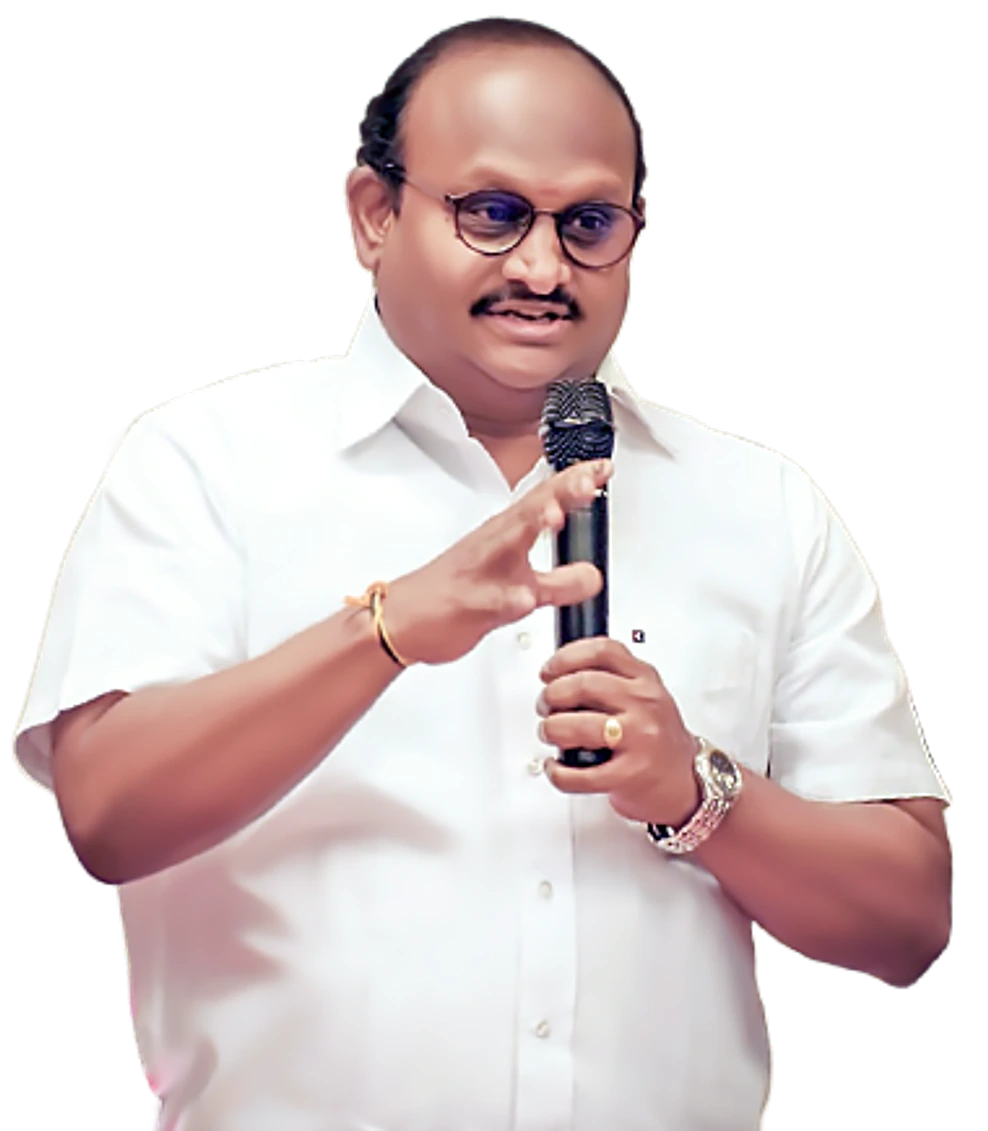
R.J. Bhuvanesh
Chief Executive Officer of the KRM Group of Schools, Chennai. He taught mathematics and computer science for ten years before leading the group, and studied at Harvard's Project Zero Classroom.